
Halal Investing 101
A BEGINNER'S GUIDE TO ETHICAL AND SHARIAH COMPLIANT INVESTING
If you’ve ever wondered, “How do I grow my money in a way that is ethical and halal?” then you’re in the right place. Halal investing isn’t complicated, but many people think it is because they hear words like “Riba,” “Gharar,” “Mudaraba”, “Musharaka”. “Murabaha” and so on.
This guide will help you understand halal investing in the simplest, clearest way possible. Think of it as a friendly conversation where you learn step by step.
By the time you finish reading, you’ll know:
• What halal investing actually means
• What makes something halal or haram
• Different types of halal investments
• How to check whether an investment is truly halal
• The benefits and risks
Let's begin.
What is Halal Investing?
Halal investing simply means investing your money in a way that follows Islamic rules and values. These rules come from the Qur'an, Hadith, the teachings of Prophet Muhammad ﷺ, and the broader framework of Islamic jurisprudence developed by scholars.
A good way to understand halal investing is this:
You should only make money by helping something real grow.
That means your money should:
• support a real business
• buy a real product
• contribute to a real service
• help something valuable happen in the real world
For example:
• Helping a business buy inventory = halal
• Charging interest on a loan = haram
Halal investing protects you from earning money in unfair or harmful ways. It encourages wealth to circulate, support communities, and create real economic benefit with shared risk.
Halal Investment Guidelines
Islam gives us four simple rules to follow when investing. Let’s break them down with easy examples.
- Focus on real, asset-backed investments
In Islam, money is not supposed to “make more money” by itself.
Money should only grow when it is connected to real assets or real business activity.
Examples:
• Real estate
• Inventory/Products
• A shop buying raw materials
• Gold and silver
• Technology/tech assets to run a business
Simple example:
Imagine you buy 100 chairs for a furniture shop. The shop sells those chairs and pays you back with profit. This is halal because it involves real goods linked with real activity.
But if you give someone money and they promise, “I’ll pay you back with this % extra just because you gave me money,” that extra amount is interest/riba, which is haram.
2. Avoid riba (interest)
Interest is one of the clearest “do not” areas in Islamic finance.
Why?
Interest means you earn money without doing anything to create value. You just earn extra because you have money, while the other person carries all the risk.
Simple analogy:
Imagine two friends. One friend borrows 100 taka from the other to buy lunch. When it’s time to return the money, the lender says: “You must give me 120 taka back, just because I gave you 100 taka earlier.”
That extra payment is unfair and counts as riba.
Real-world examples:
• Bank savings interest = haram
• Bonds that pay fixed interest = haram
• Lending money for guaranteed return = haram
3. Avoid haram industries
If something is harmful physically, emotionally, morally, or spiritually to the society, you should not invest in it.
Examples:
• alcohol
• tobacco
• gambling
• pornography/adult entertainment
• prostitution
• pork
• interest-based financial services
• casinos
• music industry
• tattoo/body alteration servuces without medical needs
• idol manufacturing/magic/supernatural services, etc
Even if those industries make a lot of money, they are not allowed because they harm society.
4. Avoid excessive uncertainty and speculation
Islamic finance wants transactions to be clear, fair, and predictable. The roles and involvement of the involved parties, risk sharing, profit sharing, loss sharing, tenure, etc., should be mentioned clearly in contracts, and everyone should be aligned regarding all possible cases.
Haram examples:
• betting
• gambling
• guessing games in financial markets
• selling something you don’t own yet
• vague contracts
• ambiguous contracts with hidden clauses
• promising guaranteed returns without risk sharing
Simple example:
If someone tells you, “Give me 10,000 taka today, and maybe next week I’ll give you 15,000 taka depending on how a random market moves,” this involves interest and also gharar (uncertainty) with maisir (speculation).
5. Shared Risk
One of the most significant fundamentals in Islamic Finance, particularly in halal investments, is risk sharing. This risk sharing may involve facing potential repayment delays, sharing the loss in Mudaraba/Musharaka contracts, or the risks in potential damage/loss/theft during product possession before handover to the buyer in Murabaha contracts, etc.
Types of Halal Investments
- Halal Stocks
Buying halal stocks means you own a small part of a halal business.
For it to be halal, the company must:
• avoid interest-heavy financing
• maintain ethical values
• And it should not have Shariah non-compliant activities/business exceeding 5% of the portfolio
2. Shariah-compliant ETFs and Mutual Funds
These funds contain many halal stocks. Think of it like a basket full of halal-approved companies.
3. Sukuk (Islamic Bonds)
Sukuk represent ownership in real assets and comply with the principles of Islamic finance. You earn profit from business activity, not interest.
4. Real Estate
Buying and renting property is halal as long as no interest-based loan is used.
5. Gold and Precious Metals
Buying and selling gold, silver etc precious metals is one of the most popular methods of halal investment. You must buy and sell and take real ownership.
6. Venture Capital and Partnerships
If you invest in a startup and share risk and reward, it is halal.
7. Shariah-compliant SME Financing Platforms
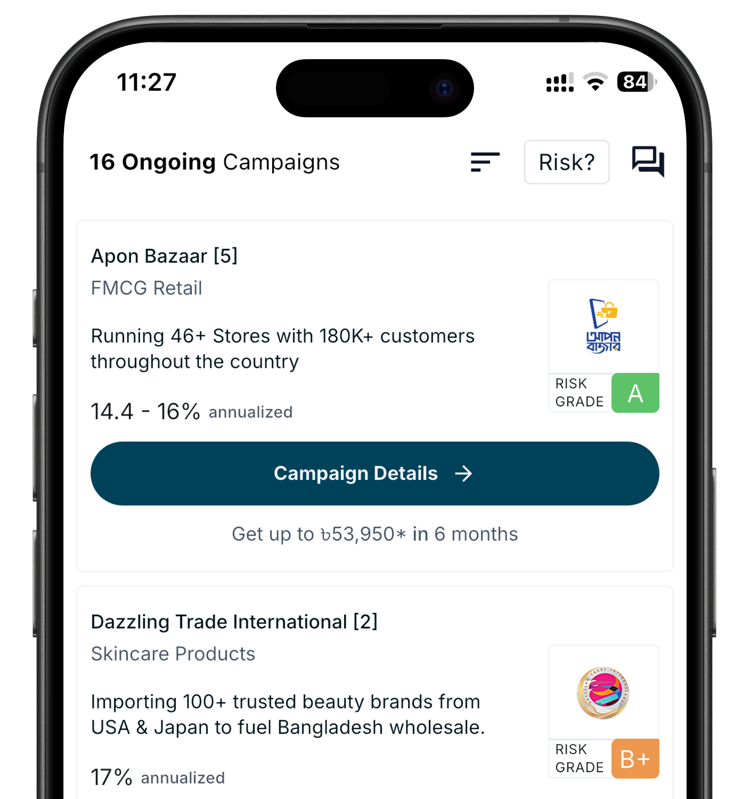
Platforms like biniyog.io let you invest small amounts into real businesses through halal contracts.
Examples of haram investments
1. Bonds - they pay interest
2. High-yield savings accounts - they generate interest
3. Derivatives - involve gambling - like speculation
4. Conventional insurance - contains interest, uncertainty and avoid shared risks
5. Forex trading - highly speculative
6. Meme or hype-based crypto - no real utility
7. Lottery or pyramid schemes - based on chance or recruitment
8. Interest-based lending platforms
9. Shariah non-compliant mutual funds that invest in non-Shariah-compliant organizations, etc
How to Evaluate Halal Investments
1. Check the business sector
Is the product or service halal? Is the company ethical? 2. Check how profit is generated Is it tied to real trade? Is the return clearly explained? 3. Check for excessive uncertainty Avoid vague, confusing, or speculative opportunities. 4. Use a Shariah-compliant platform Platforms like biniyog.io that take care of the screening, verification, due diligence, contracts, and recovery for you.
Benefits & Risks of Halal Investing
Benefits of halal investing
• Ethical wealth creation
• Stable long-term growth
• Builds discipline
• Supports communities
• Open to everyone, not only Muslims
Risks of halal investing
• Fewer options in some markets
• Beginners may find terms confusing
• No guaranteed returns
• Limited ready-made products in certain regions
7. Final Thoughts
Halal investing is a complete system that promotes fairness and real economic value. With platforms like biniyog.io, halal investing is now simple, accessible, and aligned with ethical values. You no longer need to worry about the complexities of Islamic Finance terms or the risks of traditional investments. We will do the hard thinking part for you so that you can invest in peace. However, we never recommend investing in any campaigns or projects without doing your own research. Taking the time to read this blog means you already took the first step to start your halal investment journey.
We wish that your future endeavours are filled with barakah.
For any questions, leave us a message or contact our support.
Your financial well-being is our topmost priority & our team is always here to help. Visit biniyog.io or reach out to our support team.
DOWNLOAD OUR APP
Start your journey to wealth.
Our halal investments are structured in accordance with the strictest Islamic principles.


Office Level 5, House 60, Kazi Nazrul Islam Avenue, Dhaka 1215
Contact +880 1886 064 046


